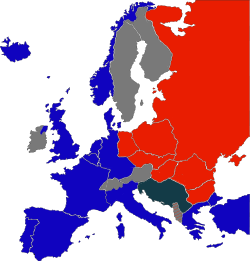
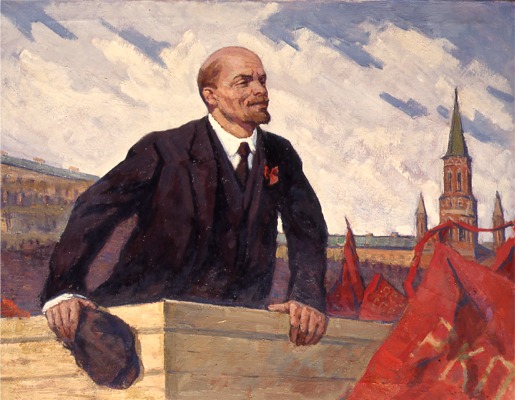
The reign of the communist nation USSR lasted for several decades and it struck terror and fear into the eyes of the crippled population. Names such as Vladimir Lenin, Joseph Stalin, Nikita Khrushchev come to mind when we recall the corrupt regimes that enforced a once powerful nation into seclusion from the rest of the planet. The situation was referred to as an "Iron Curtain" falling across Europe that cut off all relations between neighboring countries and the USSR. This era became known as the "Cold War" which consisted of espionage, increasing political pressures and tensions. A few examples of this being the Berlin Wall, the Cuban Missile Crisis and the Soviet threat of the possible utilization of the atomic bomb.
Moreover, when Winston
Churchill warned the implacable threat that lay behind the Iron Curtain during
his speech in 1946, many countries in the West responded with ignorance. It was
only when the Cold War strengthened, countries began to change their responses
and realize their mistakes. Near the end of the Cold War, the economies of
nations behind the Iron Curtain suffered. People from East Germany were longing
to partake in the prosperity, which West Germans were offered and East Germans were not. However, further to the east in Russia, citizens were becoming impatient with having to wait for their food and other basic
necessities that were neglected from them for the duration of the Cold War. In the summer of 1989, the beginning of the end was in people's grasps (literally) as the destruction Berlin Wall began, such an
act symbolized the start of liberalization for the once communist crippled
Berlin, and it reflected a changing of the tides to a world in which the
population could look forward to a life without the threat of the USSR.
In the play, the Iron Curtain is made reference to in Variation 9 where the performer says, "I'm the first classical musician from North America to be invited behind the Iron Curtain. It was a great honour to be asked. I could hardly -" This reference to the Iron Curtain is significant towards the rest of the play because it exemplifies the performer's ambition to conquer the world of music and to express his unmatchable talent and skill at the piano. Page by: Andrew Savory |
||
 |
 |
|
